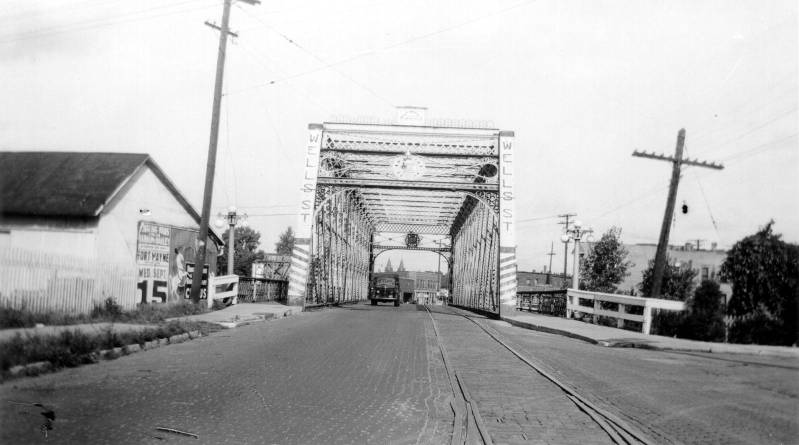
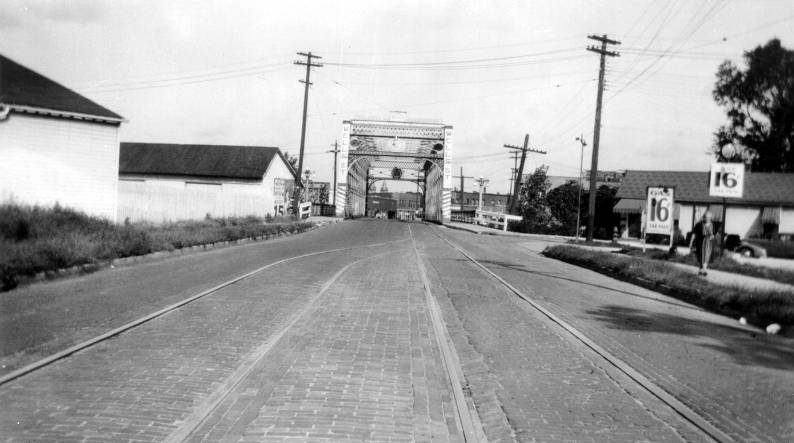
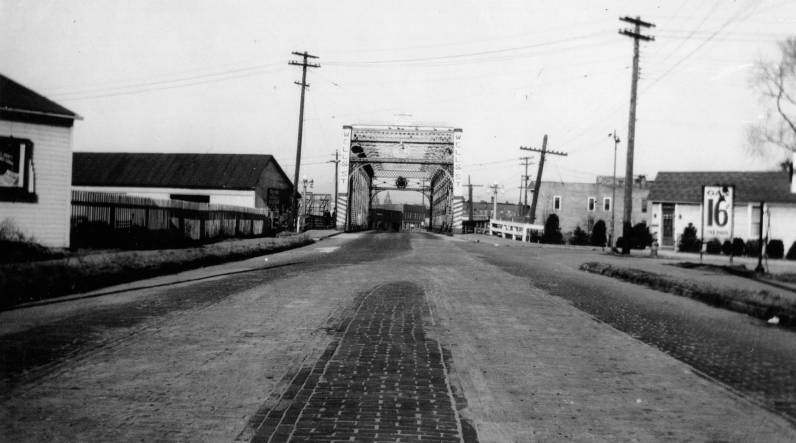
Wells Street - once known as the Fort Dearborn (Chicago) Trail, was an important link for trade in the Northwest Territory. It was named for William Wells, the local hero who was raised by the Miamis and married Little Turtle’s daughter, Sweet Breeze. He would later side with the Americans and die in a rescue attempt of Fort Dearborn’s evacuees. In 1913, Wells Street from Superior to State became part of the original 3,400 mile long Lincoln Highway. The route changed when the larger Harrison Street Bridge was completed in 1915, bypassing Wells St. south of Putnam and its smaller iron bridge.
The Lincoln Highway in Fort Wayne used the Wells St Bridge before the Harrison St Bridge was built:
https://localremnants.wordpress.com/2016/02/07/historic-wells-street-bridge-in-fort-wayne/
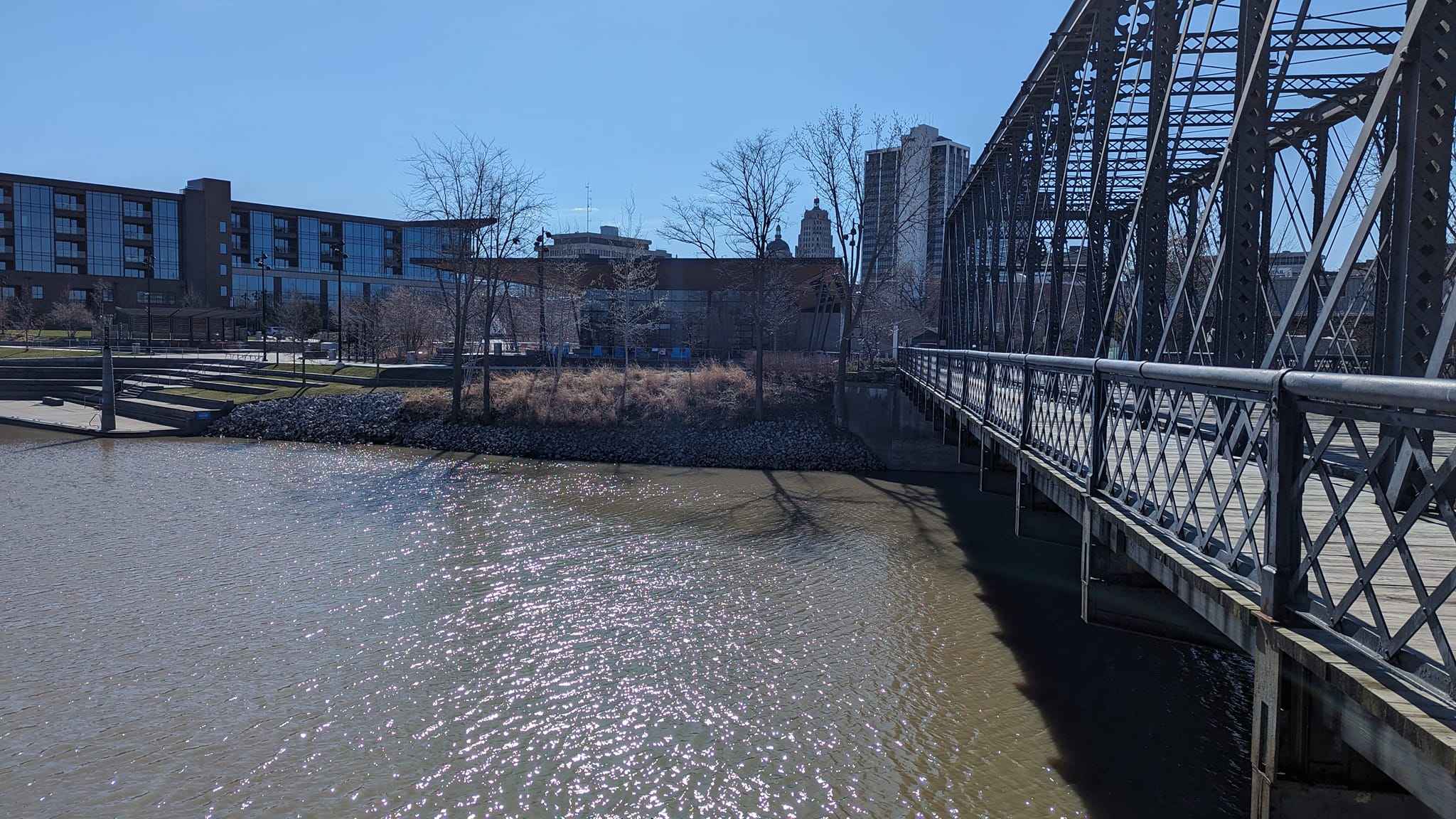
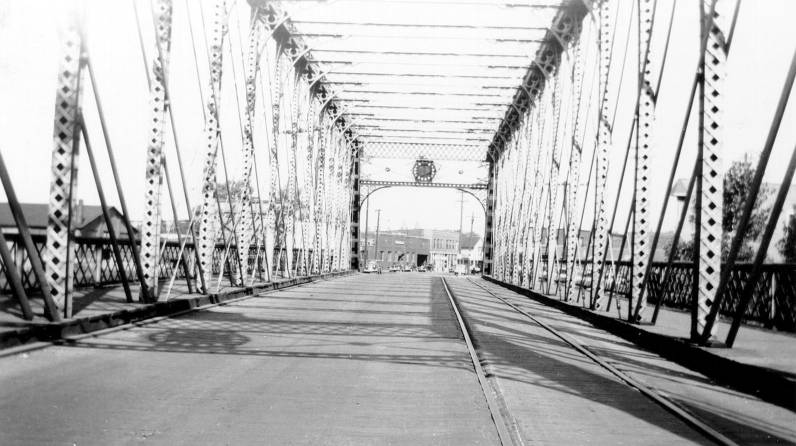
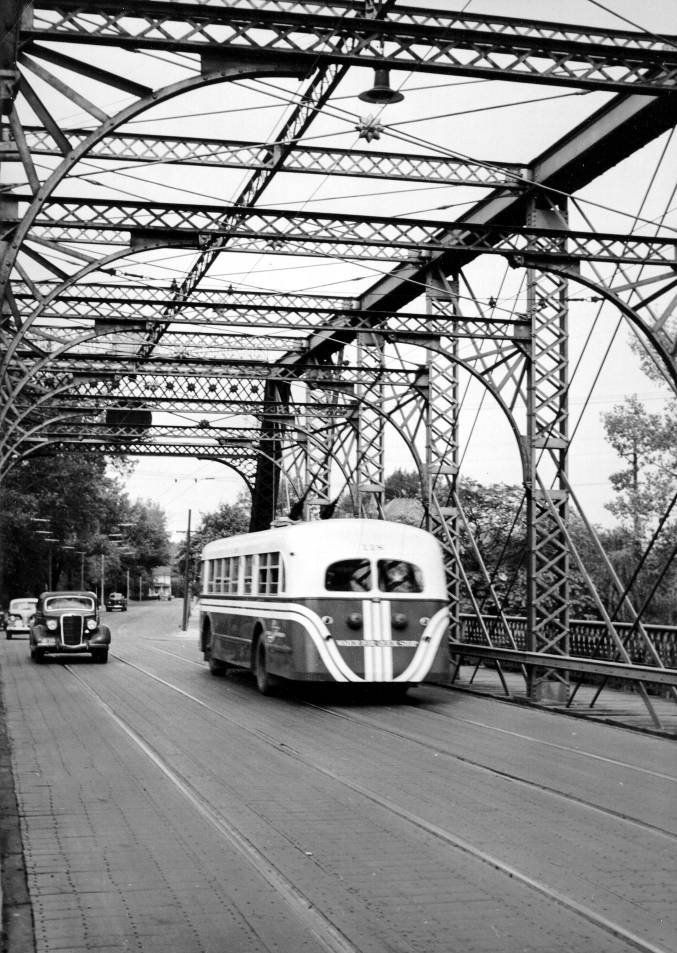
Historic places matter to ARCH Inc., so in 1978 we created a “Most Endangered List” to keep track of significant structures most likely to be lost. The Wells Street bridge was on the list, and ARCH’s advocacy helped not only save it but also successfully nominate it for the National Register of Historic Places. The bridge became part of the park system and was restored to become a pedestrian-only part of the City’s Greenway trail system. The Wells Street bridge is a double-intersection Whipple through-truss design. It was built between 1883-1884. Until 1887, trolley tracks had been confined to city streets, but the Allen County Commissioners relented that year and the Wells Street Bridge became the first to have trolley tracks. This bridge truly has historical significance in this community, and we are proud that we played a part in saving it. ARCH can advocate effectively for historic places because it has the support of its members and donors. Join us at archfw.org.
On the National Register of Historic Places, the metal bridge has ornate decorated Whipple truss style and is now a cornerstone of the new Promenade Park that opened in August 2019. Allen County has several Whipple truss bridges, although this is the last one in Fort Wayne. Completed in 1884 by the Wrought Iron Bridge Company, it was an “artistic and technological marvel,” according to Todd Pelfrey, executive director of the Allen County-Fort Wayne Historical Society. Wells Street Bridge - the only remaining iron truss bridge in Fort Wayne was built in 1884 by the Canton Bridge Company of Canton, Ohio. In 1991 ARCH added it to the Most Endangered List. In 1998 Fort Wayne Parks and Recreation acquired the bridge as part of the Rivergreenway trail system. It is now listed on the National register of Historic Places. Condensed from The Oldest Iron Bridge by Tom Castaldi published September 11, 2014 on History Center Notes & Queries blog.
Fort Wayne Parks Director Steve McDaniel, Manager of Project Administration David Weadock and Mayor Tom Henry celebrate...
Fort Wayne Parks Director Steve McDaniel, Manager of Project Administration David Weadock and Mayor Tom Henry celebrate the successful restoration of decorative components on the knee portals of the Wells Street Bridge. This project was completed in part by a federal grant. See more details here: 2022 What's Happening in the Parks: Dec. 26-Jan. 1
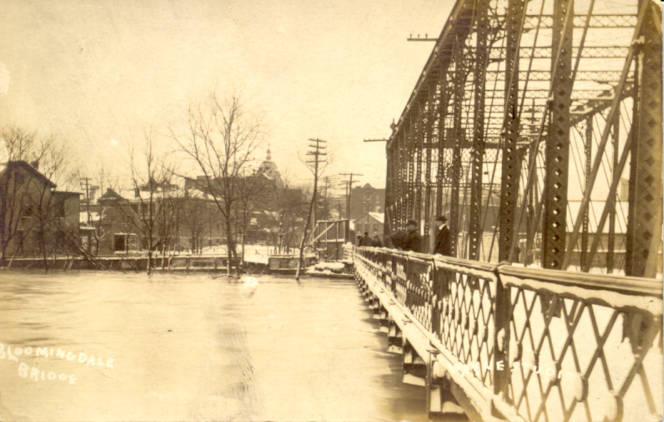
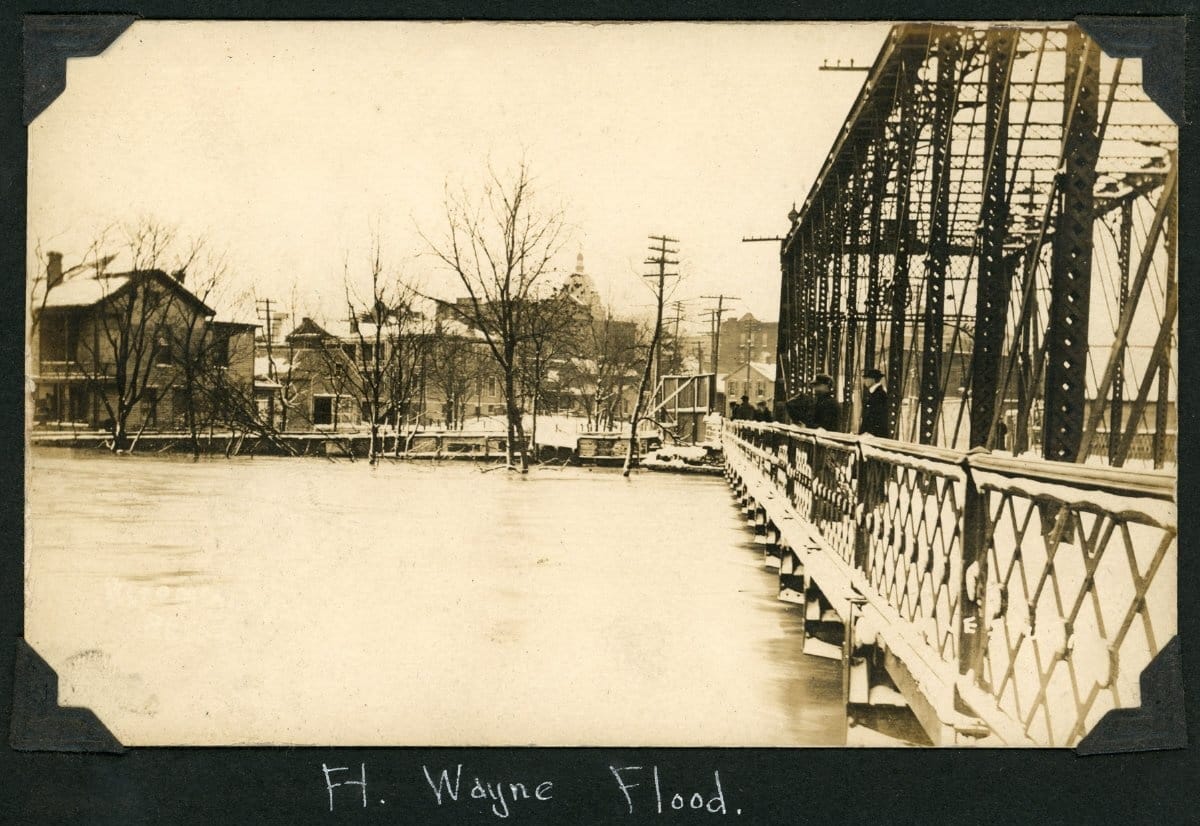
In this wonderful image taken during the 1913 Flood, the St. Mary’s River flows under the Wells Street Bridge as it is completing the last of its 99 miles before joining the St. Joseph River to form the Maumee. This still beautiful iron passenger and pedestrian bridge is the last that remains in our river-rich city once dotted with them. Built in 1884 by the Wrought Iron Bridge Company of Canton, Ohio, it is one of the few remaining Pin-Connected Whipple Through-Truss bridges left in Indiana.
However, this was far from the first conveyance over the St. Mary’s at this location. In 1831, with the growth in population of Fort Wayne outside the central core, the city licensed Zenus Henderson to operate a ferry over the St. Mary’s at Wells Street (the location of which at that time was referred to as Lee’s Ford). The city also set the fees that could be charged:
Footman — 6 cents
Man and horse — 12 cents
Horse or cow — 6 cents
Hog or sheep — 3 cents
Oxen — 25 cents
Wagon and two or more horses — 50 cents
However, the ferryman was allowed to charge double the standard fee “if required to be broken of his rest in the night” to give a lift to a late traveler.
At some point after that time the first wood bridge over the St. Mary’s was built, which itself was then replaced by a combination iron and wood bridge in 1859 built by Mosley and Company of Cincinnati, Ohio at a cost of $3,200.
However, this new bridge collapsed early the next year in 1860 “while under the burden of a large herd of cattle,” many of which drowned. By mid-summer of 1860 a new 16-foot wide wooden bridge, built partially of salvaged materials from the previous one, had been quickly constructed in its place. In March of 1884, it was reported that after officials made a visit to the “shaky…nearly rotted away” Wells Street Bridge, construction of a new bridge would finally get underway. The old wooden bridge was removed in July of that year, but as a result of the hue and cry of those using this crossing daily, a temporary smaller wooden bridge was quickly erected until the new iron bridge could be built. As it was the time of year when the river was at its lowest, this temporary wooden bridge was completed just a week later on July 22, 1884.
The new iron 180’ single span Wells Street Bridge, built 18” higher from the riverbed then the old one, opened for traffic a little over three months later on November 4, 1884. In 1887 when city trolleys were still open-air and pulled by draft horses, this bridge was the first in the city to have rails laid across it.
In 1982, after nearly 100 years of use, the bridge was closed to vehicular traffic with the opening of the new concrete Ewing Street Bridge to the west. The old bridge was owned by Allen County who determined that it would cost about $20,000 to have it removed. Fortunately, the Commissioners floated a proposal to then Mayor Win Moses that if the city was interested in the bridge, the county would give it to them along with the $20,000.
Within a week the city accepted the offer and plans were made to refurbish the bridge for pedestrian use and eventually incorporate it into the parks Rivergreenway Trails who have since made it available to rent for everything from outdoor yoga classes to weddings.
In 1988 the Wells Street Bridge was nominated and accepted onto the National Register of Historic Places. At the moment our beautiful 134 year-old Wells Street Bridge is closed due to the construction of Phase One of the Riverfront Project where it will be integrated into Promenade Park, slated to reopen in 2019.
(Image Courtesy Harter Postcard Collection ACPL)
A tip of the hat to the Allen County Public Library for allowing free access to over 40 newspaper articles (beginning with Dawson’s Fort Wayne Weekly Times in 1859) regarding this river crossing, Craig Leonard author of the NRHP nomination, and to Burt Griswold’s ”The Pictorial History of Fort Wayne Indiana” (1917) for information on Zenus Henderson’s ferry.
Randy Harter is a Fort Wayne historian, author of three books on local history, and the history/architecture guide for Fort Wayne Reader.
We LIKE this #TBT of the Historic Wells Street Bridge in Downtown Fort Wayne. We are excited to be a part of the Riverworks Design Team that has been selected for the Riverfront Fort Wayne development.
Not sure what's cooler, the brick streets or the gas for 16 cents.
This is the intersection of Wells and Superior (when you could drive and even ride the interurban across the Wells Street Bridge). As you can see the brick streets and tracks are long gone now, but we're excited to be a part of the Riverworks Design Team that will be reactivating this space. (Riverworks is Hoch Associates, Design Collaborative, Forum Studio, Inc., American Structurepoint, Inc., Engineering Resources Inc., One Lucky Guitar and Lynchpin Creative).
For "Throwback Thursday" we share another photo from John Ankenbruck's book, Twentieth Century HISTORY OF FORT WAYNE. This is the Wells Street bridge in 1975, and still standing today, although you cannot drive over it.
Promenade Park is lit up for the holidays! Come take a stroll through the park and experience the glow reflected along the St. Marys River. www.riverfrontfw.org
Promenade Park is lit up for the holidays! Come take a stroll through the park and experience the glow reflected along the St. Marys River. www.riverfrontfw.org